
A Longing for Human Decency -- Matthew 1:18-25 (4th Sunday of Advent)

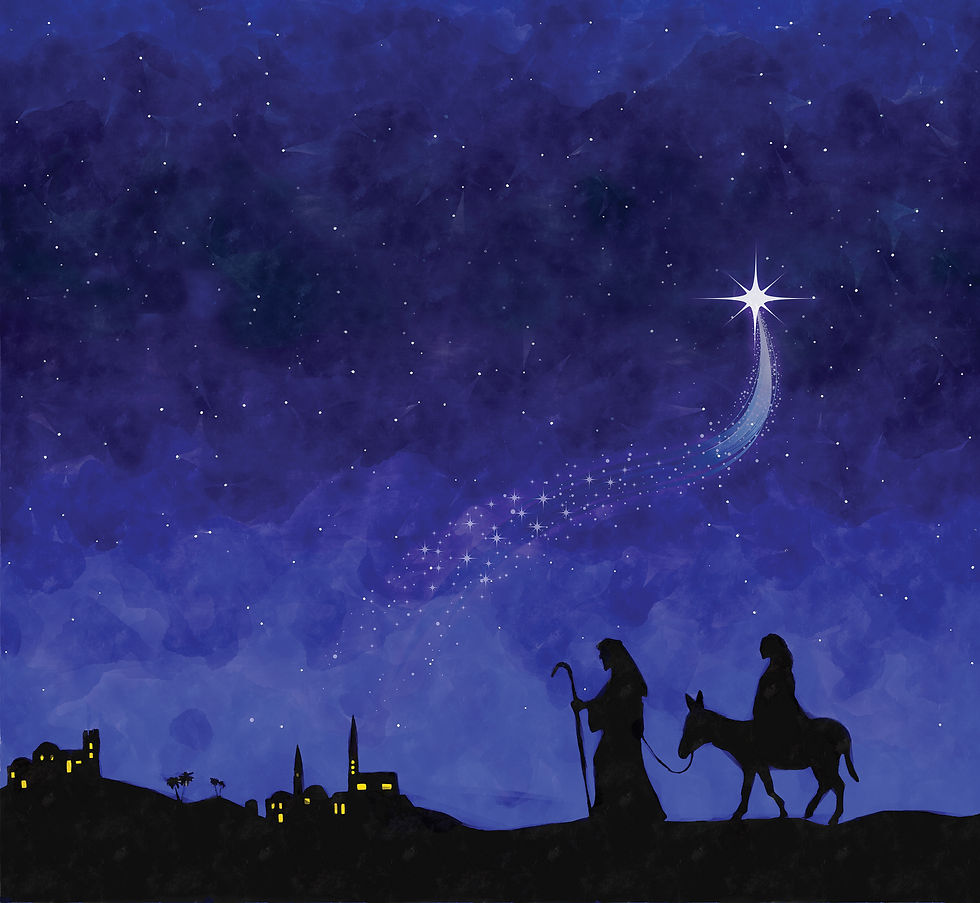
Image credit: PCUSA Special Offerings, Christmas Joy
I have a Christmas confession to make:
I have been preaching now for about 20 years. That’s 20 Advents. As Seminary Chaplain, for 10 years I curated the seminary’s Advent devotions – I wrote 2 or 3 Advent devotionals every year – and edited about 25 other devotions by other writers, every year. I have spent a good bit of time in the Scriptures that come along at Advent. I know the stories.
And what I want to confess is that in all that time, in all those sermons, in all those devotions – I have not been fair to Joseph. I haven’t. I’ve talked about and written about Mary, and Elizabeth, even Zechariah – about shepherds and angels. But hardly a word about Joseph. At best, I have left him in a supporting role.
Now, I could point to why that might be. Because of who I am, when I come to the Scriptures, I’m always looking first, listening first for voices that have been silenced down through the centuries – the voices of those who have been marginalized by the powers. And so when Luke gives us this story in which a young peasant girl stands tall and sings out how God is bringing down the powers, and lifting up the lowly – and God is doing that in her. I can’t resist. I want to hear that story, and tell that story.
And, the church itself – across traditions, down through the centuries – has privileged Mary’s story over Joseph’s story. It’s not just me. We don’t sing much about Joseph.[1] We rarely see him in art, and if we do, it’s almost always at Mary’s side. And, there’s no Joseph-equivalent to the fervent devotion that folks have to Mary, down through the centuries.
But I don’t want to make excuses. I want to own my part in this. I have not been fair to Joseph. There I’ve said it. And today, I want to start to try to do better.
So let me begin, as we experience this story from the Gospel of Matthew, chapter 1, verses 18-25, by saying this: Joseph is the hero of this story.[2] Now, we’re not forgetting Mary – we sang her story last week – and you’ll come back to it next Sunday. But in Matthew – in Matthew 1:18-25, Joseph is the hero of the story. That may not leap off the page. Joseph is not the hero of the story because he goes out with a few smooth stones and slays Goliath. He’s not the hero because he faces down Pharaoh or lions in the lions’ den. Joseph is the hero of this story... because he does the right thing. Joseph is the hero of this story because, in a menacing world, where it would be all too easy to choose either anger or indifference, Joseph chooses human decency. He chooses to do the decent, good, and loving thing.
And I don’t know about you, but in these days, I am longing for human decency. In a world where our leaders spew their venom, and the powers villainize the vulnerable, and the world rolls on... we long for human decency. And here Joseph is... in this quiet little story... just doing the right thing... the decent, good, and loving thing. In these days, that’s the story that I want and need to hear; that’s the story, I want to tell.
So let’s start by naming what may be obvious – but it’s a big shift. We are back in the Gospel of Matthew. Our lectionary of Scripture readings takes us through a three-year cycle– where each year we focus on a different gospel – Matthew, Mark, Luke – and then, in every year, we get a good bit of John sprinkled through. For this past year, we have been in the Gospel of Luke – the gospel where Jesus is turning the world rightside up – good news for the poor, release for the captive, healing for every harm – in an ever-expanding welcome of those who have for too long been on the margins. The world of the Gospel of Luke is revolutionary and inclusive, birthing the bright and liberative hope of Mary’s Magnificat.
The world of the Gospel of Matthew is different. We think that Matthew’s community has been thrown out of a larger community – thrown out because of how they understand what God is doing in Jesus Christ. The experience was painful, and it is still raw when the Gospel is put together. The world of Matthew’s Gospel is sinister – there are real enemies, and sometimes Matthew sounds angry. In Luke, the baby Jesus is greeted by shepherds and angels singing. In Matthew, there’s King Herod, who thinks Jesus may be a rival king, a threat – and, in chapter 2, Herod will launch a genocide to hunt Jesus down. Joseph, Mary and Jesus flee. In Matthew, Jesus begins his life as part of a refugee family, in danger, seeking shelter in a distant land. And yet, out of the world of Matthew, in Jesus Christ, God is birthing something entirely new. The last time we were in Matthew, I called it “A Brave New World” – others have called it “a New Creation” or “A New Humanity.”[3]
At the start of all that, we come upon this story of Joseph. We don’t know much about Joseph as the story begins: We know that Joseph is descended from David – Matthew lists the genealogy right at the start, and that will be important to Jesus’ identity as the Son of David.[4]And, we know that Joseph is “a righteous man.” Now, we might have a reaction to that word – “righteous” – I think it’s easy to think of it as “self-righteous.” But I want us to reclaim it – because it’s such a fundamental concept to so much of Scripture.
So let’s try to think of it this way:
Righteousness is being grounded in and aligned with God’s loving will for the world – with what God longs for – for this world God loves.[5] Righteousness: being aligned with God. We are out of kilter – and so we re-align – like getting our tires re-aligned – or like squaring a crooked painting on the wall. We set ourselves right, or we get set right. And that’s important. Being aligned with God is life-giving – it is the way to more life – to liberation, to love, to life. In the world of Matthew, righteousness would have been thought of primarily as aligning oneself with the law.[6] We’re going to see in this Joseph story a righteousness that begins there, but that is even more expansive.
A couple things have happened before our story opens. Joseph is betrothed to a young woman named Mary. This betrothal, in their day, isn’t quite full marriage yet, but it’s more than what we think of as engagement. It was a binding legal arrangement – all-but-married – unchastity would have been a serious offense.[7]
And yet, Scripture tells us that Mary is found to be with child. And we find that Joseph – before the story gets started – has already decided to do a decent thing. There’s a part of their law that would have sought Mary’s death – by this time they likely weren’t doing that – but, under the law, Mary she still would have been taken to the court of elders and shamed. But Joseph, a righteous man, has already chosen a more expansive path – even before the angel appears -- Joseph has decided to quietly divorce her, “not wanting to expose her to public disgrace.” Joseph is already stretching this understanding of what it is to be “righteous” – to be aligned with God’s intention for the world.[8]
And then, the angel invites Joseph to stretch a little further. “Be not afraid.” That’s what angels say. And here the “fear” would not be unfounded. There are real consequences in their community for what is going on. “Be not afraid... for this child is from the Holy Spirit.” And this story of origins begins to tell us something of who this child will be. This child is “from the Holy Spirit” – Son of God. The angel instructs Joseph to name the child Jesus, which means “he saves” or “he helps.” And the angel explains, the child also is Emmanuel – “God with Us.” Son of God. Son of Mary. Son of David. Son of Humanity. Emmanuel. God with Us.[9] Something big is happening here -- and Matthew explains (here and throughout the gospel) that all this is to fulfill all that God has been doing in the world up until now.[10]
And Joseph says yes. Like Mary in the Gospel of Luke, Joseph in the Gospel of Matthew says yes. All that the law requires of this righteous man is that he take Mary to the court of elders, tell them what has been discovered, and then walk away – leaving her to the disgrace that will surely follow – and they would still call him righteous.
But Joseph sees and chooses something more. He chooses human decency. He chooses to act for Mary’s dignity and well-being, at significant cost and risk. He chooses a greater righteousness, one that is, as one writer puts it, “excessively good and excessively generous” – a righteousness that embodies “the supreme demand of love.”[11] Joseph gives us a first glimpse of this New Humanity that is being birthed in this child, Jesus the Christ – Son of God, Son of Humanity, God with us, saving us and the world from everything that does us harm. Joseph is the hero of this story – giving us a glimpse of what God is about to do – by choosing human decency.
Now, a part of any sermon is to look around in the world, and ask – where do we see grace like that today? Out of Joseph’s story, where do we see human decency like that today? In the news, in the midst of the terror of the Bondi Beach murder of Jewish folks celebrating Hannukah, there was Ahmed al-Ahmed, a Muslim man, who risked his own life to tackle the gunman.[12] He broke through our script of separation, and chose human decency.
In this Matthew story, as I mentioned, just after Jesus is born, Joseph and Mary will decide to flee from Herod’s wrath – leaving behind all that they know and have, to live as refugees in Egypt. And I think of all those loving parents – who have lived in nations where their families lives are threatened, and chosen to leave all they know behind, to come here, where they hope their families can been safe. Like Joseph and Mary, they live in the assault now by our current regime – in the hope of human decency.
In this world of too much bad news, there are plenty of stories of folks who choose human decency – and even so, I can’t take my eyes off this glimpse that Joseph gives us – of what it is to be human, and loving, and kind.
In our Wednesday Transition Support Group, we’ve been reading Bishop Mariann Edgar Budde’s book How We Learn to Be Brave.[13] She says in her first sentence: “We all want to be brave when it counts.” And then she walks the reader through decisive moments when we can choose to be brave – when we decide to go; when we decide to stay; when we decide to start; when we decide to accept what we did not choose for ourselves; when we decide to step up to the plate. Joseph does all that. Sometimes it takes courage to be kind.
We see that in this story from the Gospel of Matthew, and we see that in the story we may know even better from the Gospel of Luke. Imagine with me the moment when these two stories come together. Imagine with me that moment when Mary and Joseph – when they know that each other knows. From Luke, we know that an angel has spoken to Mary. Somehow, word has come to Joseph that Mary is with child, maybe Mary has told him. And from Matthew, we now know that an angel has spoken to Joseph.
At some point, they both know – Mary and Joseph. They both have a sense – from the message of angels – of the fullness of what is coming to life. In that moment, when they both know that each other knows – I imagine that they sit in silence for a bit, to take it all in.
Until Joseph says softly, “I’m not going to the court of elders.”
And Mary takes that in.
And then he says, “And I don’t want to quietly divorce you. If you will have me, I am all in.”
And Mary takes that in.
And then Mary says, so that she can be sure: “You know what this means – not just for the court of elders. This is so much bigger than that. I need you to be clear. We need to be clear. God is bringing down the powers, and lifting up the lowly. And God would be doing that in us.”
And they sit together in even more silence, because they both know – the Powers will not like that. They know the peril, and they know what is at stake.
And maybe in that moment, maybe Joseph – descendant of David – remembers the words is great-great-great-great (a lot of greats) Great Grandmother Ruth once spoke to someone she loved in their own wilderness, and Joseph speaks those words to Mary: “Wherever you go, I will go. Where you dwell, I will dwell. Your people will be my people – this child, my child. May God do thus-and-such to me if anything but death parts you and me.”
And in that moment, they both know, and they choose together. They choose to do something courageous. They choose to do something loving and kind. They choose something that will cost them. They choose to help God turn the world rightside up. They choose a righteousness and a humanity that is excessively good and excessively generous, grounded in the supreme demand of love.
We come every Advent waiting, anticipating, longing – in a troubled world – we come longing for peace, and for a just world, and for love – for a little bit of hope, and maybe even some joy. We come every Advent, waiting and longing, and what we find, is that the deep longings of our heart are met in Jesus Christ.
That is the story.
And, what we find, as we journey together through Advent, is all of that coming to life in our own humanity – in those moments when we choose to align ourselves with God’s loving will for the world. Joseph suggests – and Mary too – that we might begin – in every moment – by saying yes to what God is birthing in this world – by choosing human decency – by choosing to be brave, and loving, and kind.
© 2025 Scott Clark
[1] See Winner, infra, p.63
[2] For background on this Scripture and the Gospel of Matthew, see M. Eugene Boring, “The Gospel of Matthew,” New Interpreters’ Bible Commentary, vol. viii (Nashville, TN: Abingdon Press, 1995), pp.134-37; Sheryn Dowd, Commentary in Connections, Year A, vol. 2 (Louisville, KY; Westminster John Knox Press, 2019), pp.61-63; Eugene Park, Commentary on Working Preacher at https://www.workingpreacher.org/commentaries/revised-common-lectionary/fourth-sunday-of-advent/commentary-on-matthew-118-25-11 ; Herman C. Waetjen, Matthew’s Theology of Fulfillment, Its Universality and It’s Ethnicity (London, UK: Bloomsbury Publishing, 2017); Laura F. Winner, Commentary in Connections, Year A, vol. 2 (Louisville, KY; Westminster John Knox Press, 2019), pp.63-64.
[3] See, e.g., Waetjen, pp.5-17, 25-28.
[4] See Park, supra; Waetjen, p.28.
[5] Cf. Boring, pp.134-36; Winner, p.64; Waetjen, pp.25-28.
[6] See Boring, pp.134-35.
[7] See id.
[8] See id.
[9] See id.; Waetjen, pp.27-28.
[10] See id.
[11] See Winner, p.64.
[12] See https://www.nytimes.com/2025/12/16/world/australia/bondi-beach-shooting-hero-bystander-ahmed-immigrant.html
[13] Mariann Edgar Budde, How We Learn to Be Brave (New York, NY: Penguin Random House, 2023).


Comments